the thing you need to realize about localization is that japanese and english are such vastly different languages that a straight translation is always going to be worse than the original script. nuance is going to be lost and, if you give a shit about your job, you should fill the gaps left with equivalent nuance in english. take ff6, my personal favorite localization of all time: in the original japanese cefca was memorable primarily for his manic, childish speaking style – but since english speaking styles arent nearly as expressive, woolsey adapted that by making the localized english kefka much more prone to making outright jokes. cefca/kefka is beloved in both regions as a result – hell, hes even more popular here
yes this
a literal translation is an inaccurate translation.
localization’s job is to create a meaningful experience for a different audience which has a different language and different culture. they translate ideas and concepts, not words and sentences. often this means choosing new ideas that will be more meaningful and contribute to the experience more for a different audience.
There was an example during late Tokugawa period in Japan where the translator translated, "Я люблю Вас” (I love you), to “I could die for you,” while translating
Ася, (
Asya) a novel by Ivan Turgenev. This was because a woman saying, “I love you,” to a man was considered a very hard thing to do in Japanese society.
In a more well-known example,
Natsume Soseki, a great writer who wrote, I am a Cat, had his students translate “I love you,” to “the moon is beautiful [because of] having you beside tonight,” because Japanese men would not say such strong emotions right away. He said that it would be weird and Japanese men would have more elegance.
Both of these are great examples of localization that wasn’t a straight up translation and both of these are valid. I feel like a lot of people forget the nuances in language and culture and how damn hard a translator’s job is and how knowledgeable the person has to be about both cultures. [x]
Important stuff about translation!
Note that you can apply this to your own translations even if they aren’t big pieces of literature or something. Don’t feel bad about not translating word for word. An everyday sentence may sound odd translated literally – it’s okay to edit a little bit so it feels right!
Oh my god, I’m about to go on a ramble, I’m sorry, I can’t help it, the inner translation nerd is coming out. I’m so sorry. The thing is–there is actually no such thing as an accurate translation.
It’s literally an impossible endeavor. Word for word doesn’t cut it. Sense for sense doesn’t cut it, because then you’re potentially missing cool stuff like context and nuance and rhyme and humor. Even localization doesn’t really cut it, because that means you’re prioritizing the audience over the author, and you’re missing out on the original context, and the possibility of bringing something new and exciting to your host language. Foreignization, which aims to replicate the rhythms of the original language, or to use terminology that will be unfamiliar to the target culture–(for example: the first few American-published Harry Potter books domesticated the English, and traded “trousers” for “pants”, and “Mom” for “Mum”. Later on they stopped, and let the American children view such foreignizing words as “snog” and “porridge.”)–also doesn’t cut it, because you risk alienating the target readers, or obscuring meaning.
Another cool example is Dante, and the words written above the gates of hell: Abandon hope, all ye who enter here.
In the original Italian, that’s Lasciate ogne speranza, voi ch’intrate. Speranza, like most nouns in latinate languages, has a gender: la. Hope, in Italian, is gendered female. Abandon hope, who is female. Abandon hope, who is a woman. When the original Dante enters hell, searching for Beatrice, he is doomed, subtly, from the start. That’s beautiful, subtle, the kind of delicate poetic move literature nerds gorge themselves on, and you can’t keep it in English. Literally, how do you preserve it? We don’t have a gendered hope. It doesn’t work, can’t work. So how do you compensate? Can you sneak in a reference to Beatrice in a different line? Or do you chalk her up as a loss and move onto the next problem?
You’re always going to miss something–the cool part is that, knowing you’re going to fail, you get to decide how to fail. Ortega y Gasset called this The Misery and Splendor of Translation. Basically, translation is impossible–so why not make it a beautiful failure?
My point is that literary translation is creative writing, full of as many creative decisions as any original poem or short story. It has more limitations, rules, and structures to consider, for sure–but sometimes the best artistic decision is going to be the one that breaks the rules.
My favorite breakdown of this is Le Ton Beau De Marot, a beautiful brick of a translator’s joke, in which the author tries over and over again to create a “perfect” translation of “A une Damoyselle Malade”, an itsy bitsy poem Clement Marot dashed off to his patron’s daughter, who was sick, in 1537.
This is the poem:
Ma mignonne, Je vous donne Le bon jour; Le séjour C’est prison. Guérison Recouvrez, Puis ouvrez Votre porte Et qu’on sorte Vitement, Car Clément Le vous mande. Va, friande De ta bouche, Qui se couche En danger Pour manger Confitures; Si tu dures Trop malade, Couleur fade Tu prendras, Et perdras L’embonpoint. Dieu te doint Santé bonne, Ma mignonne.
Seems simple enough, right? But it’s got a huge host of challenges: the rhyme, the tone, the archaic language (if you’re translating something old, do you want it to sound old in the target language, too? or are you translating not just across language, but across time?)
Le Ton Beau De Marot is a monster of a book that compiles all of Hofstader’s “failed” translations of Ma Mignonne, as well as the “failed” translations of his friends, and his students, and hundreds of strangers who were given the translation challenge (which you can play here, should you like!)
The end result is a hilarious archive of Sweet Damosels, Malingering Ladies, Chickadees, Fairest Friends, and Cutie Pies. It’s the clearest, funniest, best example of what I think is true of all literary translations: that they’re a thing you make up, not a thing you discover. There is no magic bridge between languages, or magic window, or magic vessel to pour the poem from one language to another–translation is always subjective, it’s always individual, it’s always inaccurate, it’s always a failure.
It’s always, in other words, art.
Which, as a translator, I find incredibly reassuring! You’re definitely, one hundred percent absolutely, gonna fuck up. Which means you can’t fuck up. You can take risks! You can experiment! You can do cool stuff like bilingual translations, or footnote translations! You write your own code of honor, your own rules that your translations will hold inviolable, and fuck it if that code doesn’t match everyone else’s*. The translations they hold inviolable are also flawed, are failures at the core, from the King James Bible right on down to No Fear Shakespeare. So have fun! It’s all in your hands, miseries and splendors both.
As someone who’s done translation work since a very early age, on a daily basis, and then worked as a professional translator (and received training), and who grew up reading literature in translation and translating poetry and prose, I’d like to add two other things here.
1. The first is an anecdote. Most of the books I read until about age 15 were Russian translations. Conan Doyle, Dumas, Tolkien, Sabatini, I read all of them in Russian, and some I’ve never read in the original language (because it freaks me out) even though I’m fluent in English and passably literate in French.
Translation was a Big Deal in the USSR, translators were relatively respected and well paid, they had a union, a lot of translation theory was produced, and the country was closed off from a lot of the rest of the world so translation was often the only way to introduce people to foreign literature. As a result, USSR translators spent a LOT of time and effort on their work, and they made a lot of conscious decisions. In most cases, they eschewed not only literal translation but also prioritizing the text over the audience.
What I mean by that is – the musketeers and hobbits I grew up reading about didn’t speak an archaic, old-time-y language. They didn’t sound like they were from Far Away and Long Ago. They talked in a slightly more literate version of how I talked to my parents every day. Of the way my friends talked at school. I never got the sense, from those books, of distance. These characters felt mundane and relatable to me, in large part because of the language.
Which is why reading these books in the original, or even reading English translations of Dumas (which try to stick to the original French far more) is so jarring and unappealing to me. Because everything feels so old. So far removed. This is why Russian speakers swear by the Soviet film adaptation of The Three Musketeers, which was a 70s musical, and more faithful to the book than any English film or TV show.
For me, making those texts accessible meant I loved them all the more. Russian speakers, to this day, tend to be sticklers about the “original” Dumas text, and scoff at English film adaptations that seek to make the story more accessible and understandable to modern audiences. Which is a neat bit of irony, I think.
2. The second is an addendum to the excellent post above. Because translation is always a failure, because there’s no “correct” way to pour a story from one language into another, translation is also always a political act. Many books have been written about this, and I just think it deserves a mention here as well: translation is always political. Who you prioritize, the words you choose, the philosophy you subscribe to – you are taking one form of meaning and changing it to another form of meaning, and that’s always going to be colored by who you are, what you value, what you want to accomplish.
There’s nothing objective about it, whether you’re a respected professional being paid to translate an award-winning book or a teenager translating Nickelback lyrics. Translation is always political.
This actually applies to shifts within language as well, and provides some hilarious ironies.
I spend a lot of time translating Shakespeare for people I know. It’s the obvious one, because it’s old enough that it starts to look like a different language. I often use Romeo and Juliet as my example, because oh my gods that play is so meta? Like it may actually be more meta, in and of itself, than the play-within-the-play in Midsummer Night’s Dream. But to know that you have to know a crapload about not just Shakespeare, but his contemporaries, the literary trends of the time, and the actual history, political and social, of the same time. So it’s nice and big and obvious.
But I also spend a lot of time translating, say, The Lord of the Rings because it turns out that if you know a lot about more archaic forms of even just English, in and of itself, suddenly there are whole volumes that are otherwise invisible. The most obvious examples are thee/you: modern English no longer observes the difference between the two, and we’ve basically done away with “thee”. So do the hobbits, in LotR and so on. But the humans, at least in Rohan and Gondor, don’t. To a modern audience that often just looks like We’re Being Old-timey, but it isn’t. It conveys actual meaning.
It matters when Eowyn starts referring to Aragorn as thee. And it matters that he gently and politely refuses to make the same switch – when she asks “wilt thou go?” and “I beg thee,” at the Paths of the Dead, his responses are incredibly courteous and very much keep using “you”, and refusing the intimacy and the dependency she’s trying to assert, which is at that point wildly inappropriate. She, in love with him, tries to put them on that intimate level; he, as someone who is formally engaged to someone else, is a guest in her king’s country, is the head of another political unit already (as Chief of the Rangers) and putative king of their neighbouring country, firmly but courteously maintains formality and respect.
Not until after everything is over and she’s happily engaged to Faramir does Aragorn allow the intimacy of “thee” (saying “I have wished thee joy ever since I first saw thee. It heals my heart to see thee now in bliss.”)
There’s a crapload of other examples of “thee”/”you” splits that matter, but the point is, because of how it’s used you actually translate this into modern English to some extent. Which just goes crazy when you dig into the conceit that Tolkien – who being an active translator himself absolutely knew all of this and in fact had a big Grump on about how most translations of Beowulf got it wrong, as far as he was concerned – set up where he was “translating” the Red Book into English for an English audience in the first place.
But the REALLY FUNNY THING is that a translation that properly maintains the thee-you split into, say, French, may more accurately and clearly convey those meanings to its audience than the original does to its English audience, because French has maintained the tu-vous split. Etc.
Can I just… talk for a moment… about how much I love how, if you know them well, words don’t have synonyms?
English, for example, is a fantastic disaster. It has so many words for things that are basically the same, and I find there’s few joys in writing like finding the right word for a sentence. Hunting down that peculiar word with particular meaning that fits in seamlessly in a structure, so the story flows on by without any bumps or leaks.
Like how a shout is typically about volume, while a yell carries an angry edge and a holler carries a mocking one. A scream has shrillness, a roar has ferocity, and a screech has outrage.
This is not to say that a yell cannot be happy or a holler cannot be complimentary, or that they cannot share these traits, but they are different words with different connotations. I love choosing the right one for a sentence, not only for its meanings but for how it sounds when read aloud. (Do I want sounds that slide together, peaceful and seamless, or something that jolts the reader with its contrast? Snap!)
I love how many words for human habitats there are. I love how cottage sounds quaint and cabin sounds rustic. I love steadiness of house, the elegance of residence, the stateliness of manor, and tired stubbornness of shack. I love how a dwelling is different to a den.
And I love how none of them can really touch the possessive warmness of all the connotations of home.
Words are great.
I did not expect to cry by the end of this, but I did.
Which proves the point, no?
“The difference between the right word and the almost right word is like the difference between a lightning bug and the lightning.” – Mark Twain (and one of my favorites, since I happen to agree with everything the OP said!)
Part of the New Internet Grammar: using question marks not to denote questions, but upturns in voice, so that a tentative statement gets a question mark but a flatly delivered question doesn’t.
why would you do this
It just seems right?
I think my favorite part is that people act like this is so horrible but it’s like?? my brain automatically translates it anyways??? so???
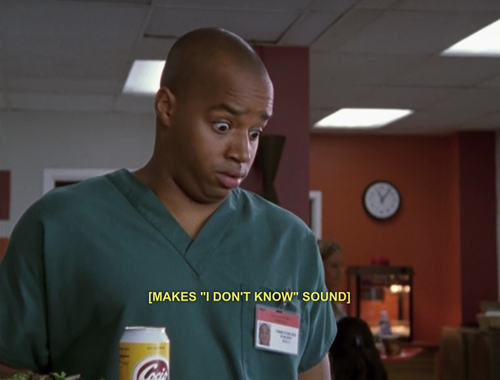
You know what I think is really cool about language (English in this case)? It’s the way you can express “I don’t know” without opening your mouth. All you have to do is hum a low note, a high note, then another lower note. The same goes for yes and no. Does anyone know what this is called?
I love Internet grammar I love how “you what mate” is an incredulous question but “u wot m8” is an invitation to fight I love how straight people are different to Straight People I love how smol is so much smaller than small I live how thiS, tHIS and THIS are all different in my mind i luv how dis spelling make sarcasm I love how haha, lol and lmao are completely different emotions I love how….. This…. Makes everything… So much more dramatic???? Tone is so hard to convey in writing u go lil buddies you go
This is something I’ve been meaning to talk about, and I may do a full blog post at some point, but here’s a capsule version:
The Benign Violation Theory of humor, which is probably the best one out there, suggests that something is perceived as funny when it is simultaneously perceived as violating how the world “should” work and as benign. Something like the “gun” meme, for example, is funny because it violates our sense of how a joke should progress, and at the same time it’s harmless.
Racist/sexist/etc shock humor violates our sense of how the world work–in either a “that’s not true!” or “you’re not allowed to say that!” way–and therefore whether you find it funny is based on whether you find it benign, which is to say either you think it’s harmless or you don’t care about the people it harms. (This is the root of the punch up/kick down distinction–jokes that punch up are funnier than jokes that kick down because the people they target are less vulnerable and therefore less likely to experience harm.)
So yes, science agrees that if you think racist jokes are funny, the reason is that you don’t care about the feelings of the people the joke is about. There’s a word for that.
Natalie Portman being confused by the fact that you have to say “hi” to someone before starting a conversation in France got me like ?????
“I feel there’s a lot of rules of politeness and codes of behavior there you have to follow. […] A friend of mine taught me that when you go in some place you have to say “bonjour” before you say anything else, then you have to wait two seconds before you say something else. So if you go into a store you can’t be like “do you have this in another size,” or they’ll think you’re super rude and then they’ll be rude to you.” [X]
So that’s it guys. French are not rude, we just don’t like it when people don’t say “Hello” or “Hi” when they start a conversation.
Don’t everyone say “Hi” before they ask something to someone? What’s next? Saying please is also a french thing or others countries does that too?
Canada is similar. We say sorry and please. The Hello thing seems strange, but it actually makes sense.
Bro, this threw me for a loop when I moved up north. Like in the southern United States you say “Hi, how are you?” And then make a few seconds of small talk before you ask your question or order your food and when I went to Connecticut they were like “What do you want?” Without any hello or anything. In other places they just STARE at you waiting on you to place your order and gtfo.
I laid my hand over my chest the first time, and the only way to describe my look was “aghast” before I said “Good lord!” My husband said it’s the most southern thing he’s seen me do. He thought it was hilarious. But…. Like??? That’s rude as fuck??????? Don’t y’all say say “Hello” before throwing your demands at someone??
maybe this is why everyone thinks new yorkers are rude
this is absolutely why ppl think new englanders r rude. no one has any fucking manners
african culture, at least in ghana, demands you greet a person before you ask them something. if youre in an open market they may even ignore you if you dont.
We do this in Australia as well. If you just started straight off saying “yeah I want XXXX” we’d think you’re rude as all fuck. You say hi, then make your request. It’s basic acknowledgement of the other person as a person rather than some random request-filling machine.
Huh. Speaking as a New Englander, I usually go with “Excuse me,” but sometimes “hi” or “hey,” but with no pause – it’ll be, “Excuse me, hi, I was looking for X?” From my POV, it seems rude to get too chatty and waste some stranger’s time; I assume they have better things to do than make small talk with me, so I just get my request out there so they can answer me and get back to whatever needs doing. I always thank folks for their help afterwards, if that helps?
(The rules of etiquette are strange. People say New Englanders are rude and cold, but once during an unexpected snowstorm here in Seattle, my car got stuck and I was standing by the side of the road at a busy intersection in the snow for half an hour waiting for my housemate to come pick me up, and not a single person stopped. Back in Massachusetts, every other car on the road would’ve been pulling up to check to see if I was okay, if my phone was working, did I need a lift, etc.)
No but this was the first thing my cousin told me in France? you never ever ever start a conversation with anyone, not even like “Nice weather today, huh?” without saying Bonjour first. You HAVE to greet them or, just like Ghana, they’ll ignore the shit out of you, you rude little fucker
(And “excuse me” or “pardon me” doesn’t cut it. you still have to open with bonjour)
[and I can’t speak for New England but coming from Chicago and then moving Out West where the culture is VERY influenced by the South and DETERMINED to think of themselves as small town folk… I HATE when I have to make small talk before ordering food??? Like, if it’s a coffee shop that’s pretty much empty I’ll chit chat for a few seconds, but I’m still not going to make inane conversation about the weather unless the weather is extreme.
In a big city it is rude as fuck to waste my time making small talk with me when we are not even friends or neighbors??? I am here to get shit done. There are four other people in line behind me, and I don’t want to waste their time. I am here, I HAVE MY ORDER ALREADY DECIDED BY THE TIME I GET TO THE FRONT BECAUSE I AM NOT A CAVE WOMAN, and I am being polite by saying both Please and Thank You and not wasting other people’s daylight.]
I live in a small northern city, and I feel it would be rude to engage someone in more than maaaaaybe a sentence of small talk before placing my order. In addition to feeling I was wasting their time, I’d feel like I was demanding emotional labour (small-talk is emotional labour for *me*) that they weren’t being paid to give.
so bizarre. New Yorker here. Saying hi, how are you, etc before these kinds of commercial interactions is what’s rude to me – because ffs, there are people in line behind you, we have lives, move it along. It’s really just a dramatic cultural difference – but borne of a real practical necessity.
Oh my god saying ‘hi’ takes less than A SINGLE SECOND YOU ARE NOT WASTING ANYBODY’S TIME
In Spain you have to say hello to people before you talk to them even people who work in retail deserve that bare minimum courtesy hello??
Transplanted New Yorker here, and the feeling here is: people who work in retail deserve the bare minimum courtesy you would afford anyone else, which is to not waste their time. You maybe say a half-second “hi” and/or possibly “excuse me” to be sure you have their attention, then you get to the point as quickly and concisely as possible. You don’t wait to get a “hi” back, you probably don’t ask “how are you”, you definitely don’t talk about the weather. You smile and keep your tone of voice courteous-to-friendly, you say please, you thank them when you’re done, and you do. not. waste. their. time.
Except ”time” is really only shorthand for the concept: you don’t intrude on their lives more than you have to. NY is a very very crowded city which allows for very little personal space, so New Yorkers have developed a form of courtesy that involves minimizing our unavoidable intrusions on each other. Which is why we hold doors without making eye contact, and why we tend to feel that in any interaction with a stranger, it’s actively rude to do anything but get to the point immediately.
Interesting discussion of regional differences in conversational convention. But the amount of “my way is the right way; everyone else is super rude and also wrong” going on in this post is giving me hives.
Hey. Listen. "Polite” and “rude” are relative concepts. Something you were taught was rude may not be seen as rude elsewhere, and might even be the polite thing to do. Conversely, something you might have been taught was polite might be seen as rude elsewhere. Saying “no one has any manners” about a group of people whose culture and, by extension, whose conversational expectations work differently than yours is really arrogant.
In the US the thumbs up means good job or great. In France and Germany it means one, they start counting with the thumb instead of the index finger. In Greece it’s an obscene sexual gesture.
This guy I knew in college worked with the campus d/Deaf/HoH group and told a story about the dinner they had to welcome everyone in. They were trying to tell this little old lady what one of the dishes was, something casserole I forget what kind, and she was getting really flustered. Finally they figured out they were speaking to her in ASL and she was from South Africa. The ASL sign for whatever it was (spinach maybe?) in South African Sign means sex. They were offering this little old lady a sex casserole.
There’s an Italian toast ‘chin chin’, mimicking the sound of the glasses clinking together. It becomes hilarious when Japanese folks are around since in Japanese chin means penis.
As for the South, I will bet you anything that how we have conversations at the register stemmed from the homestead days when a farmer would come in to town maybe once a month and this would be the only time they’d get to talk to someone they didn’t live with. I like talking with customers! If I can get them to smile then it’s a victory and I have a better day for it. It only becomes emotional labor if they’re an outright ass or are sexually harassing me. But in the big crammed city of New York it makes sense to take the get your shit and get out approach, people have a subway to catch. Out here I had to drive myself anyway since it’s fifteen minutes to the edge of town from where I live, so what does it matter if I spend an extra minute at the register?
It’s important to be aware of the differences and ultimately there’s a degree of ‘when in Rome’ that has to happen. Someone who moves from Greece to the US is going to be startled by the amount of thumbs up but ultimately they’re going to have to adjust. Someone from the US is probably going to be shocked that telling someone they did a good job was taken as an insult and they similarly are going to have to adjust. Mom’s a damn Yankee transplant and said it was weird moving to the South and having cashiers younger than her daughter call her dear, but that’s just what we do. Sweetheart, darling, honey, sugar, they don’t have overtly romantic/sexual connotations here. As long as there’s not a leer attached to it if a guy calls me ‘sugar’ when I’m at work it doesn’t parse as a flirt because it’s not one, it parses the same as if he called me ‘miss’. But when a busload of Californians came through it took me three people to realize that ‘baby’ was not flirting, it was just California.
NOTHING is universal.
This is the biggest place I’ve ever worked so it took some getting used to, like any skill, but even being socially awkward it’s easy to tell what scripts to follow. Test the waters, if they don’t respond then okay this is a move them through kind of person, be quick and efficient and to the point, feel good when they smile at ‘last question I promise, do you want your receipt’. If they do then pull out the five small talk scripts, get a smile, feel good when they laugh at the cat small talk script.
It’s also important to note that claiming your culture’s way of doing polite right is a fantastic way to fall into some really bigoted nonsense. In Puerto Rico the personal bubble is much smaller than in the US proper, like RIGHT at your elbow close. I had a cashier who was super uncomfortable because our steward was getting in her personal space constantly and he was pissed off because he was trying to HELP her with moving orders why is she mad at him? Once I sat them down and explained the difference they both had this aw shit moment because from their own standpoints they were being polite and from the others’ standpoints they were being rude. After that they were fine, when he got a little too close she’d say ‘whoa man my bubble’ and he’d laugh and shake is head and step back.
Lots of non-white cultures have things like that, particularly since white America has serious problems with sexualizing ANY physical contact to the point we’re all touch starved. The normal speaking voice is at a higher volume or it’s more acceptable to show your emotions or gesture when you speak. None of this is WRONG, but when people star getting into ‘my culture is the only right culture’ then guess who comes out on top? It ain’t the little guy.
One of my labmates was from Poland, and she had a tendency to come off as kind of abrupt and brusk, verging on mean. In particular, when she was providing feedback on a presentation or paper she could come across as SUPER cutting. Which was not her intention! From the way she would explain it, we had a running joke in the lab, “it sounds nicer in Polish.”
And this is actually true; there are scientific articles comparing the cultural contexts for communication! It’s really neat.
So in (most parts of) America, we equate indirectness with politeness. “Excuse me, would it be possible for you to perhaps pass me that salt, if you don’t mind?” The more roundabout you are, the more we consider that a signal of social courtesy.
In Poland, not only is indirectness viewed as rudely wasting the listener’s time, but directness is viewed as communicating intimacy and friendliness. “Give me the salt.”
 sparksoffandommagic