sich niederlegen – to lie down einschlafen – to fall asleep der Traum – dream träumen – to dream der Albtraum – nightmare
sich hin und her wälzen – to toss and turn schnarchen – to snore
aufwachen – to wake up aufstehen – to get up schlaftrunken – drowsy, sleepy (lit. “sleep drunk“) wach – awake
das Schlafzimmer – bedroom das Bett – bed die Couch, das Sofa – couch, sofa das Nachtkästchen, der Nachttisch – nightstand die Nachttischlampe – bedside lamp der Wecker – alarm clock
der Schlafmangel – sleep deprivation die Schlafstörung – sleep disorder die Schlaflosigkeit – insomnia das Schlafwandeln – sleepwalking
The fact that this language is at a point where “I don’t care” and “behold the field in which I grow my fucks” mean exactly the same thing blows my mind sometimes
the thing you need to realize about localization is that japanese and english are such vastly different languages that a straight translation is always going to be worse than the original script. nuance is going to be lost and, if you give a shit about your job, you should fill the gaps left with equivalent nuance in english. take ff6, my personal favorite localization of all time: in the original japanese cefca was memorable primarily for his manic, childish speaking style – but since english speaking styles arent nearly as expressive, woolsey adapted that by making the localized english kefka much more prone to making outright jokes. cefca/kefka is beloved in both regions as a result – hell, hes even more popular here
yes this
a literal translation is an inaccurate translation.
localization’s job is to create a meaningful experience for a different audience which has a different language and different culture. they translate ideas and concepts, not words and sentences. often this means choosing new ideas that will be more meaningful and contribute to the experience more for a different audience.
There was an example during late Tokugawa period in Japan where the translator translated, "Я люблю Вас” (I love you), to “I could die for you,” while translating
Ася, (
Asya) a novel by Ivan Turgenev. This was because a woman saying, “I love you,” to a man was considered a very hard thing to do in Japanese society.
In a more well-known example,
Natsume Soseki, a great writer who wrote, I am a Cat, had his students translate “I love you,” to “the moon is beautiful [because of] having you beside tonight,” because Japanese men would not say such strong emotions right away. He said that it would be weird and Japanese men would have more elegance.
Both of these are great examples of localization that wasn’t a straight up translation and both of these are valid. I feel like a lot of people forget the nuances in language and culture and how damn hard a translator’s job is and how knowledgeable the person has to be about both cultures. [x]
Important stuff about translation!
Note that you can apply this to your own translations even if they aren’t big pieces of literature or something. Don’t feel bad about not translating word for word. An everyday sentence may sound odd translated literally – it’s okay to edit a little bit so it feels right!
Oh my god, I’m about to go on a ramble, I’m sorry, I can’t help it, the inner translation nerd is coming out. I’m so sorry. The thing is–there is actually no such thing as an accurate translation.
It’s literally an impossible endeavor. Word for word doesn’t cut it. Sense for sense doesn’t cut it, because then you’re potentially missing cool stuff like context and nuance and rhyme and humor. Even localization doesn’t really cut it, because that means you’re prioritizing the audience over the author, and you’re missing out on the original context, and the possibility of bringing something new and exciting to your host language. Foreignization, which aims to replicate the rhythms of the original language, or to use terminology that will be unfamiliar to the target culture–(for example: the first few American-published Harry Potter books domesticated the English, and traded “trousers” for “pants”, and “Mom” for “Mum”. Later on they stopped, and let the American children view such foreignizing words as “snog” and “porridge.”)–also doesn’t cut it, because you risk alienating the target readers, or obscuring meaning.
Another cool example is Dante, and the words written above the gates of hell: Abandon hope, all ye who enter here.
In the original Italian, that’s Lasciate ogne speranza, voi ch’intrate. Speranza, like most nouns in latinate languages, has a gender: la. Hope, in Italian, is gendered female. Abandon hope, who is female. Abandon hope, who is a woman. When the original Dante enters hell, searching for Beatrice, he is doomed, subtly, from the start. That’s beautiful, subtle, the kind of delicate poetic move literature nerds gorge themselves on, and you can’t keep it in English. Literally, how do you preserve it? We don’t have a gendered hope. It doesn’t work, can’t work. So how do you compensate? Can you sneak in a reference to Beatrice in a different line? Or do you chalk her up as a loss and move onto the next problem?
You’re always going to miss something–the cool part is that, knowing you’re going to fail, you get to decide how to fail. Ortega y Gasset called this The Misery and Splendor of Translation. Basically, translation is impossible–so why not make it a beautiful failure?
My point is that literary translation is creative writing, full of as many creative decisions as any original poem or short story. It has more limitations, rules, and structures to consider, for sure–but sometimes the best artistic decision is going to be the one that breaks the rules.
My favorite breakdown of this is Le Ton Beau De Marot, a beautiful brick of a translator’s joke, in which the author tries over and over again to create a “perfect” translation of “A une Damoyselle Malade”, an itsy bitsy poem Clement Marot dashed off to his patron’s daughter, who was sick, in 1537.
This is the poem:
Ma mignonne, Je vous donne Le bon jour; Le séjour C’est prison. Guérison Recouvrez, Puis ouvrez Votre porte Et qu’on sorte Vitement, Car Clément Le vous mande. Va, friande De ta bouche, Qui se couche En danger Pour manger Confitures; Si tu dures Trop malade, Couleur fade Tu prendras, Et perdras L’embonpoint. Dieu te doint Santé bonne, Ma mignonne.
Seems simple enough, right? But it’s got a huge host of challenges: the rhyme, the tone, the archaic language (if you’re translating something old, do you want it to sound old in the target language, too? or are you translating not just across language, but across time?)
Le Ton Beau De Marot is a monster of a book that compiles all of Hofstader’s “failed” translations of Ma Mignonne, as well as the “failed” translations of his friends, and his students, and hundreds of strangers who were given the translation challenge (which you can play here, should you like!)
The end result is a hilarious archive of Sweet Damosels, Malingering Ladies, Chickadees, Fairest Friends, and Cutie Pies. It’s the clearest, funniest, best example of what I think is true of all literary translations: that they’re a thing you make up, not a thing you discover. There is no magic bridge between languages, or magic window, or magic vessel to pour the poem from one language to another–translation is always subjective, it’s always individual, it’s always inaccurate, it’s always a failure.
It’s always, in other words, art.
Which, as a translator, I find incredibly reassuring! You’re definitely, one hundred percent absolutely, gonna fuck up. Which means you can’t fuck up. You can take risks! You can experiment! You can do cool stuff like bilingual translations, or footnote translations! You write your own code of honor, your own rules that your translations will hold inviolable, and fuck it if that code doesn’t match everyone else’s*. The translations they hold inviolable are also flawed, are failures at the core, from the King James Bible right on down to No Fear Shakespeare. So have fun! It’s all in your hands, miseries and splendors both.
As someone who’s done translation work since a very early age, on a daily basis, and then worked as a professional translator (and received training), and who grew up reading literature in translation and translating poetry and prose, I’d like to add two other things here.
1. The first is an anecdote. Most of the books I read until about age 15 were Russian translations. Conan Doyle, Dumas, Tolkien, Sabatini, I read all of them in Russian, and some I’ve never read in the original language (because it freaks me out) even though I’m fluent in English and passably literate in French.
Translation was a Big Deal in the USSR, translators were relatively respected and well paid, they had a union, a lot of translation theory was produced, and the country was closed off from a lot of the rest of the world so translation was often the only way to introduce people to foreign literature. As a result, USSR translators spent a LOT of time and effort on their work, and they made a lot of conscious decisions. In most cases, they eschewed not only literal translation but also prioritizing the text over the audience.
What I mean by that is – the musketeers and hobbits I grew up reading about didn’t speak an archaic, old-time-y language. They didn’t sound like they were from Far Away and Long Ago. They talked in a slightly more literate version of how I talked to my parents every day. Of the way my friends talked at school. I never got the sense, from those books, of distance. These characters felt mundane and relatable to me, in large part because of the language.
Which is why reading these books in the original, or even reading English translations of Dumas (which try to stick to the original French far more) is so jarring and unappealing to me. Because everything feels so old. So far removed. This is why Russian speakers swear by the Soviet film adaptation of The Three Musketeers, which was a 70s musical, and more faithful to the book than any English film or TV show.
For me, making those texts accessible meant I loved them all the more. Russian speakers, to this day, tend to be sticklers about the “original” Dumas text, and scoff at English film adaptations that seek to make the story more accessible and understandable to modern audiences. Which is a neat bit of irony, I think.
2. The second is an addendum to the excellent post above. Because translation is always a failure, because there’s no “correct” way to pour a story from one language into another, translation is also always a political act. Many books have been written about this, and I just think it deserves a mention here as well: translation is always political. Who you prioritize, the words you choose, the philosophy you subscribe to – you are taking one form of meaning and changing it to another form of meaning, and that’s always going to be colored by who you are, what you value, what you want to accomplish.
There’s nothing objective about it, whether you’re a respected professional being paid to translate an award-winning book or a teenager translating Nickelback lyrics. Translation is always political.
This actually applies to shifts within language as well, and provides some hilarious ironies.
I spend a lot of time translating Shakespeare for people I know. It’s the obvious one, because it’s old enough that it starts to look like a different language. I often use Romeo and Juliet as my example, because oh my gods that play is so meta? Like it may actually be more meta, in and of itself, than the play-within-the-play in Midsummer Night’s Dream. But to know that you have to know a crapload about not just Shakespeare, but his contemporaries, the literary trends of the time, and the actual history, political and social, of the same time. So it’s nice and big and obvious.
But I also spend a lot of time translating, say, The Lord of the Rings because it turns out that if you know a lot about more archaic forms of even just English, in and of itself, suddenly there are whole volumes that are otherwise invisible. The most obvious examples are thee/you: modern English no longer observes the difference between the two, and we’ve basically done away with “thee”. So do the hobbits, in LotR and so on. But the humans, at least in Rohan and Gondor, don’t. To a modern audience that often just looks like We’re Being Old-timey, but it isn’t. It conveys actual meaning.
It matters when Eowyn starts referring to Aragorn as thee. And it matters that he gently and politely refuses to make the same switch – when she asks “wilt thou go?” and “I beg thee,” at the Paths of the Dead, his responses are incredibly courteous and very much keep using “you”, and refusing the intimacy and the dependency she’s trying to assert, which is at that point wildly inappropriate. She, in love with him, tries to put them on that intimate level; he, as someone who is formally engaged to someone else, is a guest in her king’s country, is the head of another political unit already (as Chief of the Rangers) and putative king of their neighbouring country, firmly but courteously maintains formality and respect.
Not until after everything is over and she’s happily engaged to Faramir does Aragorn allow the intimacy of “thee” (saying “I have wished thee joy ever since I first saw thee. It heals my heart to see thee now in bliss.”)
There’s a crapload of other examples of “thee”/”you” splits that matter, but the point is, because of how it’s used you actually translate this into modern English to some extent. Which just goes crazy when you dig into the conceit that Tolkien – who being an active translator himself absolutely knew all of this and in fact had a big Grump on about how most translations of Beowulf got it wrong, as far as he was concerned – set up where he was “translating” the Red Book into English for an English audience in the first place.
But the REALLY FUNNY THING is that a translation that properly maintains the thee-you split into, say, French, may more accurately and clearly convey those meanings to its audience than the original does to its English audience, because French has maintained the tu-vous split. Etc.
Person A: You know… the thing Person B: The “thing”? Person A: Yeah, the thing with the little-! *mutters under their breath* Como es que se llama esa mierda… THE FISHING ROD
As someone with multiple bilingual friends where English is not the first language, may I present to you a list of actual incidents I have witnessed:
Forgot a word in Spanish, while speaking Spanish to me, but remembered it in English. Became weirdly quiet as they seemed to lose their entire sense of identity.
Used a literal translation of a Russian idiomatic expression while speaking English. He actually does this quite regularly, because he somehow genuinely forgets which idioms belong to which language. It usually takes a minute of everyone staring at him in confused silence before he says “….Ah….. that must be a Russian one then….”
Had to count backwards for something. Could not count backwards in English. Counted backwards in French under her breath until she got to the number she needed, and then translated it into English.
Meant to inform her (French) parents that bread in America is baked with a lot of preservatives. Her brain was still halfway in English Mode so she used the word “préservatifes.” Ended up shocking her parents with the knowledge that apparently, bread in America is full of condoms.
Defined a slang term for me……. with another slang term. In the same language. Which I do not speak.
Was talking to both me and his mother in English when his mother had to revert to Russian to ask him a question about a word. He said “I don’t know” and turned to me and asked “Is there an English equivalent for Нумизматический?” and it took him a solid minute to realize there was no way I would be able to answer that. Meanwhile his mom quietly chuckled behind his back.
Said an expression in English but with Spanish grammar, which turned “How stressful!” into “What stressing!”
Bilingual characters are great but if you’re going to use a linguistic blunder, you have to really understand what they actually blunder over. And it’s usually 10x funnier than “Ooops it’s hard to switch back.”
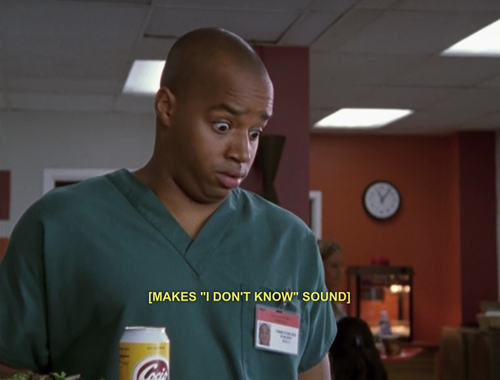
You know what I think is really cool about language (English in this case)? It’s the way you can express “I don’t know” without opening your mouth. All you have to do is hum a low note, a high note, then another lower note. The same goes for yes and no. Does anyone know what this is called?

 sparksoffandommagic