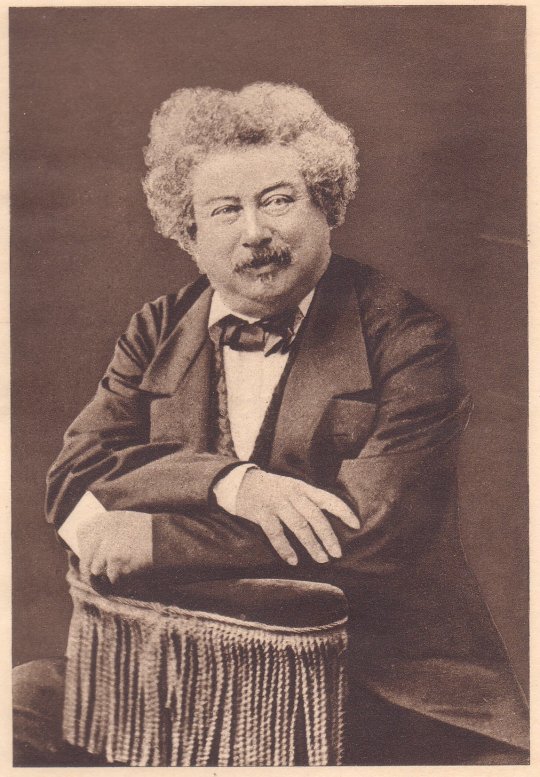
Let’s not forget to acknowledge Alexandre Dumas this Black History Month
The writer of two of the most well known stories worldwide, The Three Musketeers and The Count of Monte Cristo was a black man.
That’s excellence.
Let’s not forget that he was played on screen by a white man. And the fact that he was black is barely ever mentioned or the book he wrote inspired by his experiences.
Other things not to forget about Alexandre Dumas:
chose to take on his slave grandmother’s last name, Dumas, like his father did before him.
grew up too poor for formal education, so was largely self-taught, including becoming a prolific reader, multilingual, well-travelled, and a foodie, resulting in his writing both a combination encyclopedia/cookbook (which just— is fucking outrageous to me) AND the adaptation of The Nutcracker on which Tchaikovsky based his ballet
he also wrote a LOOOOT of nonfiction and fiction about history, politics, and revolution, bc he was pro-monarchy, but a radical cuss, and that got him in a lot of hot water at home and abroad.
even beyond that, he generally put up with a lot of racist bullshit in France, so he went and wrote a novel about colonialism and a BLATANTLY self-insert anti-slavery vigilante hero (which he then cribbed from to write the Count of Monte Cristo, the main character of which, Edmond Dantés, Dumas also based on himself).
(…a novel which also features a LOAD of PoC beyond the Count, and at LEAST one queer character, btw, bc EVERY MOVIE ADAPTATION OF ANYTHING BY DUMAS IS A LIE; seriously, at LEAST one of the four Musketeers is Black, y’all.)
famously, when some fuckshit or other wanted to come at Dumas with some anti-Black foolishness, Dumas replied, “My father was a mulatto, my grandfather was a Negro, and my great-grandfather a monkey. You see, Sir, my family starts where yours ends.”
for the bicentennial of his birthday, Pres. Jacques Cirac was like, “…sorry about the hella racism,” and had Dumas’s ashes reinterred at the Panthéon of Paris, bc if you’re gonna keep the corpses of the cream of the crop all together, Dumas’s more widely read and translated than literally everybody else.
and they are still finding stuff old dude wrote, seriously; like discovering “lost” works as recently as 2002, publishing stuff for the first time as recently as 2005.
ALSO IMPORTANT:
SWAG
I am absolutely ashamed to admit I had NO idea Dumas was black.
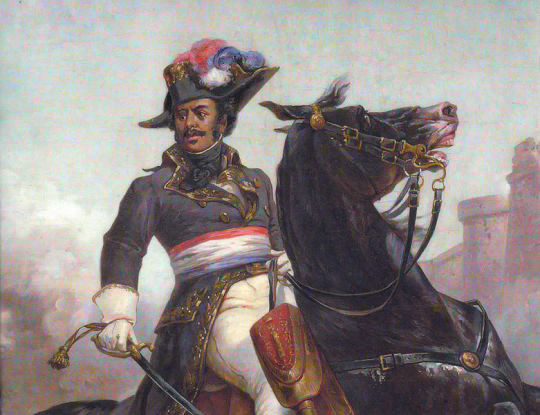
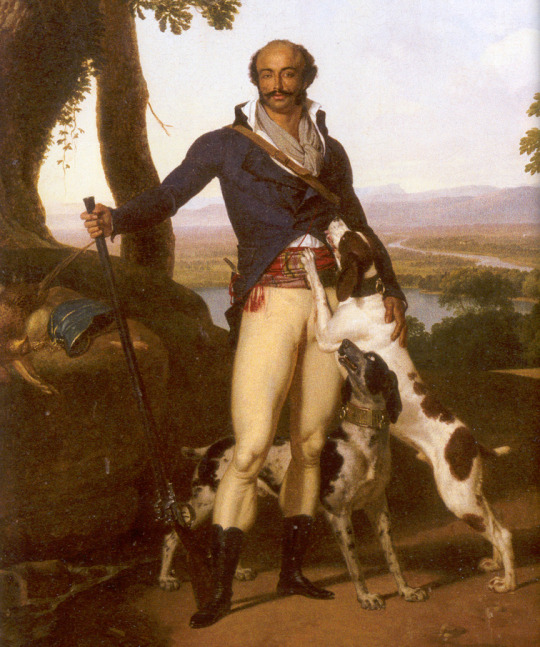
daddy general dumas was an immense fierce french warrior who was a 6 foot plus, stunningly gorgeous and charismatic Black gentleman
he invaded egypt
the native egyptians said “is this napoleon? this must be napoleon. we for one welcome our majestic new overlord”
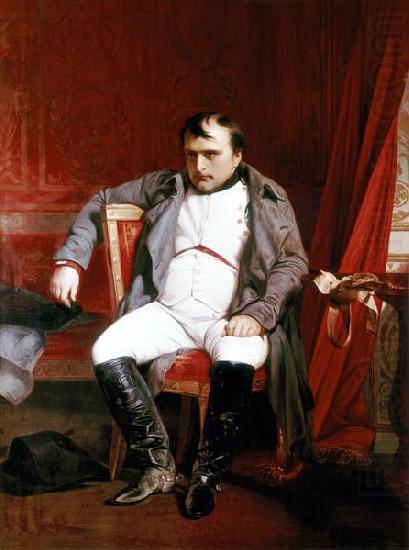
then napoleon showed up
napoleon has all the presence of yesterday’s plain Tesco hummus
the native egyptians were like “… no… no, we’ve thought very hard and we’ll have General Dumas actually”
this did not make napoleon happy
in fact it made him jealous
napoleon felt so emasculated that he launched a campaign of revenge against General Dumas, including taking away his pension, that probably inspired a lot of Alexandre’s rather satisfying scenes in which fathers are nobly avenged and the money-grubbing villains are rubbed in the mud
The answer is apparently “because we’re actually able to eat it”
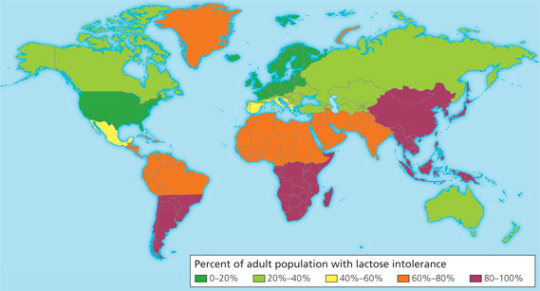
Fun fact: white people (specifically Northern European white people) have a genetic mutation that allows them to digest lactose even after weaning, which is abnormal for all mammals and also most humans. It’s theorized that because Northern Europe doesn’t get a lot of sun, an alternative source of vitamin D (like milk) would be a useful trait. It’s a very recent mutation that would only have happened after humans started domesticating animals like cows and goats.
oh no, my bizarre moment has come, cause lactose tolerance is actually A Thing I Know About because it’s played a fascinating role in human evolution for thousands of years. This chart displays some of the broad trends, but it’s giving near continental averages, which doesn’t showcase how this kind of thing really breaks down and some of the surprising exceptions.
Lactose tolerance is the majority trait for only a very few population groups: North Europeans (and therefore populations that draw heavily from that stock, such as America,) nomadic central Eurasians, and sub-Saharan pastoralist Africans, but that latter group is often overlooked. The vast majority of Africans cannot process lactose, but certain people groups whose lifestyles have revolved around cattle for thousands of years will have 80% and even approaching 100% lactose tolerance rates. They’d be spots of dark green amidst a sea of orange and burgundy on the above chart.
Our hunter-gatherer ancestors were almost entirely lactose intolerant, that is definitely the biological norm (and people groups who maintained that lifestyle, such as Native Americans, remained as such – along with groups who transitioned to sedentary agricultural lifestyles, but I’ll get into that). As such, lactose tolerance is an adaptive trait that only became prevalent in environments that exerted strong selective pressure for it. So, cows were domesticated some 10,000 odd years ago in the Middle East (and some have contended for an independent domestication event in Africa as well). In either case, cattle quickly spread across the continent and we know there was milking and cheese production at least 6,000 years ago in both the Nile and Mesopotamia. While cow meat would have been enjoyed by all, in agricultural societies milk and cheese would have been options, but hardly staples as there were plenty of other things to eat as well, and therefore there would have been no selective pressure for processing lactose. Also, sedentary societies had ways of processing milk and cheese that allowed lactose intolerant people to drink/eat dairy products. Fermenting milk or aging cheese breaks down lactose, making it a non issue once ingested. This is why fermented milk may seem utterly foul to many Westerners, but is extremely common in other parts of the world. But, fermentation and aging requires time, and the ability to store things in a single location for weeks or even months. Sedentary societies adapted the milk to fit their biology, but nomadic societies did the reverse.
There are still mobile pastoralist societies in Africa today, and there have been for thousands and thousands of years. For many of them, cows are not one of many dietary options, they are the single dietary staple around which their lifestyle revolves. Biologically, this means you gotta get with the program if you wanna survive. For most mobile tribes, fermentation and aging weren’t options, so there would have been strong selective pressure favoring those who could drink milk straight outta the cow, as they would have had an additional, highly nutritious food source available to them. Milk also allowed for a marked shortening of the weaning process, transitioning children from breastmilk to cow’s milk, which would again be advantageous for groups where both the men and women work and are always on the move. Over generations these populations specialized into essentially cow-based lifestyles, creating a survival niche highly advantageous to them, and fast forward thousands of years and there are groups in Africa with near ubiquitous lactose tolerance, while the rest of the continent (and the world really) is nearly entirely intolerant.
Many of these same factors would have influenced the central Eurasian populations, which is why Mongolians and other descendants of nomadic steppe peoples are largely lactose tolerant, as mare’s milk would have been a dietary staple (though they also developed efficient ways to ferment it).
North Europeans developed lactose tolerance in response to deficiencies in certain nutrients. The northern climate limited Vitamin D production, and the agricultural products available to them were often low on calcium and protein, and so dairy farming developed alongside agriculture to create a more rounded diet (and this was limited to Northern Europeans, as Mediterranean peoples such as the Romans wrote about their great confusion at the northern barbarians’ ability to drink fresh milk)
And I promise all of this is fascinating because the ability to process lactose evolved independently in several different population groups and in response to different factors: lifestyles revolving around cows, lifestyles revolving around horses, deficiencies in climate and agriculture. Besides providing insight into human history and biology, lactose tolerance is also a great example of convergent evolution, where different genetic populations in different environments produce similar results.
And uh, that’s my rant about the role of milk and lactose tolerance in human evolution.
My fav part is “I promise all of this is fascinating”.
• any target
• churches in texas
• abandoned 7/11’s
• your bedroom at 5 am
• hospitals at midnight
• warehouses that smell like dust
• lighthouses with lights that don’t work anymore
• empty parking lots
• ponds and lakes in suburban neighborhoods
• rooftops in the early morning
• inside a dark cabinet
playgrounds at night
rest stops on highways
deep in the mountains
early in the morning wherever it’s just snowed
trails by the highway just out of earshot of traffic
schools during breaks
those little beaches right next to ferry docks
bowling alleys
unfamiliar mcdonalds on long roadtrips
your friends living room once everybody but you is asleep
laundromats at midnight
what the fuck
galeries in art museums that are empty except for you
the lighting section of home depot
stairwells
•hospital waiting rooms
•airports from midnight to 7am
• bathrooms in small concert venues
I just got the weirdest feeling I swear
OK LISTEN THERE ARE REASONS FOR THIS!!!
A lot of these places are called liminalspaces – which means they are throughways from one space to the next. Places like rest stops, stairwells, trains, parking lots, waiting rooms, airports feel weird when you’re in them because their existence is not about themselves, but the things before and after them. They have no definitive place outside of their relationship to the spaces you are coming from and going to. Reality feels altered here because we’re not really supposed to be in them for a long time for think about them as their own entities, and when we do they seem odd and out of place.
The other spaces feel weird because our brains are hard-wired for context – we like things to belong to a certain place and time and when we experience those things outside of the context our brains have developed for them, our brains are like NOPE SHIT THIS ISN’T RIGHT GET OUT ABORT ABORT. Schools not in session, empty museums, being awake when other people are asleep – all these things and spaces feel weird because our brain is like “I already have a context for this space and this is not it so it must be dangerous.” Our rational understanding can sometimes override that immediate “danger” impulse but we’re still left with a feeling of wariness and unease.
Listen I am very passionate about liminal spaces they are fascinating stuff or perhaps I am merely a nerd.
I, for one, appreciate your passion for liminal spaces and thank you for explaining it to the rest of us.


 sparksoffandommagic