I LEARNED RECENTLY THAT PLATO WON THE GOLD MEDAL IN THE OLYMPICS FOR WRESTLING THREE TIMES. THIS PUTS A NEW PERSPECTIVE ON THINGS. I ALWAYS IMAGINED PLATO TO BE FRAIL AND MISSHAPEN BUT HE MUST HAVE BEEN FRICKEN RIPPED. I WONDER IF ARISTOTLE EVER FELT ANXIETY ABOUT GETTING PHYSICALLY (I.E. NOT JUST METAPHYSICALLY) DISMANTLED BY PLATO. PLATO WAS PROBABLY PISSED OFF BY AT LEAST A HANDFUL OF QUESTIONS ARISTOTLE ASKED HIM. ARISTOTLE WAS A LITERAL GENIUS TOO. IMAGINE PLATO LECTURING AND WRITING ON A BLACKBOARD AND ARISTOTLE THROWING A COMMENT OUT THERE ABOUT SOME COMPLEX MISSTEP IN PLATO’S LOGIC AND PLATO’S CHALK JUST SNAPS AND ARISTOTLE’S TESTICLES SUCK WAY BACK UP TO WHERE THEY DROPPED FROM, THEN PLATO IN A BLUR APPEARS BESIDE ARISTOTLE SITTING AT HIS DESK AND HE PICKS HIM UP AND SUPLEXES HIS MACEDONIAN ASS.
given the content of a lot of Plato’s conclusions I wouldn’t be surprised to learn that Plato responded to a lot of reasonable criticisms with “Fight me” and that was the end of it.
We’re not actually sure whether Plato is his real name! Some people speculate that, because Platon means “broad” in Greek, this was actually his wrestling nick name. Basically, it’s like Dwayne Johnson became a famous philosopher and everyone still called him “The Rock”.
Women have more power and agency in Shakespeare’s comedies than in his tragedies, and usually there are more of them with more speaking time, so I’m pretty sure what Shakespeare’s saying is “men ruin everything” because everyone fucking dies when men are in charge but when women are in charge you get married and live happily ever after
I think you’re reading too far into things, kiddo. Take a break from your women’s studies major and get some fresh air.
Right. Well, I’m a historian, so allow me to elaborate.
One of the most important aspects of the Puritan/Protestant revolution (in the 1590’s in particular) was the foregrounding of marriage as the most appropriate way of life. It often comes as a surprise when people learn this, but Puritans took an absolutely positive view of sexuality within the context of marriage. Clergy were encouraged to lead by example and marry and have children, as opposed to Catholic clergy who prized virginity above all else.Through his comedies, Shakespeare was promoting this new way of life which had never been promoted before. The dogma, thanks to the church, had always been “durr hburr women are evil sex is bad celibacy is your ticket to salvation.” All that changed in Shakespeare’s time, and thanks to him we get a view of the world where marriage, women, and sexuality are in fact the key to salvation.
The difference between the structure of a comedy and a tragedy is that the former is cyclical, and the latter a downward curve. Comedies weren’t stupid fun about the lighter side of life. The definition of a comedy was not a funny play. They were plays that began in turmoil and ended in reconciliation and renewal. They showed the audience the path to salvation, with the comic ending of a happy marriage leaving the promise of societal regeneration intact. Meanwhile, in the tragedies, there is no such promise of regeneration or salvation. The characters destroy themselves. The world in which they live is not sustainable. It leads to a dead end, with no promise of new life.
And so, in comedies, the women are the movers and shakers. They get things done. They move the machinery of the plot along. In tragedies, though women have an important part to play, they are often morally bankrupt as compared to the women of comedies, or if they are morally sound, they are disenfranchised and ignored, and refused the chance to contribute to the society in which they live. Let’s look at some examples.
In Romeo and Juliet, the play ends in tragedy because no-one listens to Juliet. Her father and Paris both insist they know what’s right for her, and they refuse to listen to her pleas for clemency. Juliet begs them – screams, cries, manipulates, tells them outright I cannot marry, just wait a week before you make me marry Paris, just a week, please and they ignore her, and force her into increasingly desperate straits, until at last the two young lovers kill themselves. The message? This violent, hate-filled patriarchal world is unsustainable. The promise of regeneration is cut down with the deaths of these children. Compare to Othello. This is the most horrifying and intimate tragedy of all, with the climax taking place in a bedroom as a husband smothers his young wife. The tragedy here could easily have been averted if Othello had listened to Desdemona and Emilia instead of Iago. The message? This society, built on racism and misogyny and martial, masculine honour, is unsustainable, and cannot regenerate itself. The very horror of it lies in the murder of two wives.
How about Hamlet? Ophelia is a disempowered character, but if Hamlet had listened to her, and not mistreated her, and if her father hadn’t controlled every aspect of her life, then perhaps she wouldn’t have committed suicide. The final scene of carnage is prompted by Laertes and Hamlet furiously grappling over her corpse. When Ophelia dies, any chance of reconciliation dies with her. The world collapses in on itself. This society is unsustainable. King Lear – we all know that this is prompted by Cordelia’s silence, her unwillingness to bend the knee and flatter in the face of tyranny. It is Lear’s disproportionate response to this that sets off the tragedy, and we get a play that is about entropy, aging and the destruction of the social order.
There are exceptions to the rule. I’m sure a lot of you are crying out “but Lady Macbeth!” and it’s a good point. However, in terms of raw power, neither Lady Macbeth nor the witches are as powerful as they appear. The only power they possess is the ability to influence Macbeth; but ultimately it is Macbeth’s own ambition that prompts him to murder Duncan, and it is he who escalates the situation while Lady Macbeth suffers a breakdown. In this case you have women who are allowed to influence the play, but do so for the worse; they fail to be the good moral compasses needed. Goneril, Regan and Gertrude are similarly comparable; they possess a measure of power, but do not use it for good, and again society cannot renew itself.
Now we come to the comedies, where women do have the most control over the plot. The most powerful example is Rosalind in As You Like It. She pulls the strings in every avenue of the plot, and it is thanks to her control that reconciliation is achieved at the end, and all end up happily married. Much Ado About Nothing pivots around a woman’s anger over the abuse of her innocent cousin. If the men were left in charge in this play, no-one would be married at the end, and it would certainly end in tragedy. But Beatrice stands up and rails against men for their cruel conduct towards women and says that famous, spine-tingling line – oh God, that I were a man! I would eat his heart in the marketplace. And Benedick, her suitor, listens to her. He realises that his misogynistic view of the world is wrong and he takes steps to change it. He challenges his male friends for their conduct, parts company with the prince, and by doing this he wins his lady’s hand. The entire happy ending is dependent on the men realising that they must trust, love and respect women. Now it is a society that is worthy of being perpetuated. Regeneration and salvation lies in equality between the sexes and the love husbands and wives cherish for each other. The Merry Wives of Windsor – here we have men learning to trust and respect their wives, Flastaff learning his lesson for trying to seduce married women, and a daughter tricking everyone so she can marry the man she truly loves. A Midsummer Night’s Dream? The turmoil begins because three men are trying to force Hermia to marry someone she does not love, and Helena has been cruelly mistreated. At the end, happiness and harmony comes when the women are allowed to marry the men of their choosing, and it is these marriages that are blessed by the fairies.
What of the romances? In The Tempest, Prospero holds the power, but it is Miranda who is the key to salvation and a happy ending. Without his daughter, it is likely Prospero would have turned into a murderous revenger. The Winter’s Tale sees Leontes destroy himself through his own jealousy. The king becomes a vicious tyrant because he is cruel to his own wife and children, and this breach of faith in suspecting his wife of adultery almost brings ruin to his entire kingdom. Only by obeying the sensible Emilia does Leontes have a chance of achieving redemption, and the pure trust and love that exists between Perdita and Florizel redeems the mistakes of the old generation and leads to a happy ending. Cymbeline? Imogen is wronged, and it is through her love and forgiveness that redemption is achieved at the end. In all of these plays, without the influence of the women there is no happy ending.
The message is clear. Without a woman’s consent and co-operation in living together and bringing up a family, there is turmoil. Equality between the sexes and trust between husbands and wives alone will bring happiness and harmony, not only to the family unit, but to society as a whole. The Taming of the Shrew rears its ugly head as a counter-example, for here a happy ending is dependent on a woman’s absolute subservience and obedience even in the face of abuse. But this is one of Shakespeare’s early plays (and a rip-off of an older comedy called The Taming of a Shrew) and it is interesting to look at how the reception of this play changed as values evolved in this society.
As early as 1611 The Shrew was adapted by the writer John Fletcher in a play called The Woman’s Prize, or The Tamer Tamed. It is both a sequel and an imitation, and it chronicles Petruchio’s search for a second wife after his disastrous marriage with Katherine (whose taming had been temporary) ended with her death. In Fletcher’s version, the men are outfoxed by the women and Petruchio is ‘tamed’ by his new wife. It ends with a rather uplifting epilogue that claims the play aimed:
To teach both sexes due equality
And as they stand bound, to love mutually.
The Taming of the Shrew and The Tamer Tamed were staged back to back in 1633, and it was recorded that although Shakespeare’s Shrew was “liked”, Fletcher’s Tamer Tamed was “very well liked.” You heard it here folks; as early as 1633 audiences found Shakespeare’s message of total female submission uncomfortable, and they preferred John Fletcher’s interpretation and his message of equality between the sexes.
So yes. The message we can take away from Shakespeare is that a world in which women are powerless and cannot or do not contribute positively to society and family is unsustainable. Men, given the power and left to their own devices, will destroy themselves. But if men and women can work together and live in harmony, then the whole community has a chance at salvation, renewal and happiness.
In the immortal words of the bard himself: fucking annihilated.
honestly there are two kinds of people who make history posts on this blue hellsite, and they’re all either
“LISTEN HERE MOTHERFUCKERS LET ME LEARN YOU A THING ABT THE MOST BADASS HUMAN THAT GRACED THIS PATHETIC EARTH WITH THEIR PRESENCE AND WHOM EVERYONE SHOULD ADMIRE BC THEY ARE THE BEST AND MOST HEROIC PERSON TO WHOM WE AS A SOCIETY ARE ETERNALLY INDEBTED: john jay.”
or
“okay so unlike you basic bitches who can’t read, i’ve been doing some actual research so guess what? i, a 20-something in my first year of college, am now the only and leading expert on my chosen topic. yall better listen to me bc i’m right and you’re wrong, you uneducated babies. my interpretation of the source material is now absolute truth and yours is stupid and yall should be happy that i’m even telling you this, you worthless slime people, so fuck off. i despise my audience”
dont forget
“today i saw john adams heelying out of a 7/11 carrying boombox on his shoulder 1980’s style”
my favorite thing i’ve learned in college is that way back in ancient china there was this poet/philosopher guy who wrote this whole pretentious poem about how enlightened he was that was like “the eight winds cannot move me” blahblahblah and he was really proud of it so he sent it to his friend who lived across the lake and then his friend sends it back and just writes “FART” (or the ancient Chinese equivalent) on it and he was SO MAD he travels across the lake to chew his friend out and when he gets there his friend says “wow. the eight winds cannot move you, but one fart sends you across the lake”
vikings made their woman handle the finances because they thought math is witchcraft
During a military campaign, Vlad the Impaler, the basis for Dracula, once pulled his troops out of a major engagement in a valley at dusk so that the sun was in their enemies’ eyes. Once they were over the hill, they set loose a bunch of rabid bats who flew away from the sun (towards the enemy) and attacked them, leading to significant infection in their ranks, and Vlad’s eventual victory. Because of how the bats appeared from where Vlad’s soldiers appeared to be at dusk, myth stated that the soldiers turned into bats at night, which is where the “Dracula can change into a bat” thing came from.
raphael, the renaissance painter, literally fucked himself to death
during the Ottoman Empire, the Sultan Ibrahim I had 280 of his concubines drowned in the ocean after ONE of them slept with another man.
The earths carbon levels fell by 700 million tons because Genghis Khan killed so many people
King James (the one known for revising the Bible) liked to watch women give birth. That’s where the “tradition” of women laying on their backs to give birth comes from.
Previous to that it was common for women to have chairs with holes in them and straw underneath, so they could sit on this special chair and let gravity help with the birthing process.
Spicy foods were thought to increase libido and cause children to masturbate. To prevent kids from touching themselves at night, a man named Kellogg invented the blandest combination of cereals, marketed it at kids, and called it Corn Flakes
At the Battle of Gettysburg during the American Civil War, a small group of Union soldiers had run out of ammo against a large group of the Confederate Army. In a panic, the Union soldiers sprinted at them, screaming, with only bayonets drawn. The entire Confederate Army that was present turned and ran away in fear, not knowing that they had literally no ammunition.
When the Roman Emperor Caligula went to invade Britain he stood on the coast of Gaul with his army and suddenly declared war on Neptune, God of the Sea. He had his men collect sea shells from the shore as “spoils from the Ocean”.
Oh and he appointed his horse to the senate.
During the Austro-Prussian war of 1868, Liechtenstein sent over an army of 80 people, but ended up coming back with 81 people because they befriended a guy on the other side.
People refused to send art and sculptures to be displayed at the Chicago World’s Fair because of Chicago’s history with fire. They had to fireproof the Fine Arts building to get people to agree to loan them their art. A year after the fair closed most of the grounds were destroyed by fire but the Fine Arts building survived. It’s now the Museum of Science and Industry.
The carbon emissions thing from Ghenghis Khan is not the whole story. He also planted trees wherever he conquered land because he liked trees and thought they were important. He conquered enough to make an impact on the global climate.
My bros I have been doing a lot of
reading about Wacky WWII Hijinks lately and I want to tell you a
story because I love it okay
once upon a time there was a dude in
Spain named Juan Pujol Garcia. Pujol was a chicken farmer. Pujol
hated him some goddamn fascists.
See Spain had recently ended its civil
war, with the fascists taking power. So when WWII broke out in
Europe, Spain technically remained neutral but in practice was buddy
buddy with the Nazis. Juan Pujol Garcia thought this was pretty
bullshit
so soon after war breaks out Pujol
travels to his local British embassy and goes “hey I wanna spy on
the Nazis for you”
“who the fuck are you?” say the
British, and kick him out
but Pujol is not deterred! He still
wants to dunk on some fascists, so now he goes to his local German embassy instead. “hey” he
says, “I wanna spy on the British for you, I sure do hate them”
“yeah
okay” say the Germans “that seems pretty legit”
and
just like that Pujol now officially works for the Abwehr, the German
intelligence agency. They hand him some spy gear (invisible ink and
such) and instruct him to travel to Lisbon, and from there make his
way into the UK. So Pujol heads to Lisbon, and a little while later
writes to his German handlers telling them he’s made it to England
Pujol
had not made it to England. He had, in fact, made it to the Lisbon
public library, where he checked out a number of English guide books
and set about just wholesale making shit up
this
is slightly complicated by the fact that, for example, he completely
did not understand British currency and all his expense reports were
basically gibberish. He also reported things like bribing Scotsmen,
because the people of Glasgow would “do anything for a litre of
wine” (an actual quote) because, hey, people in Spain like wine so
that’s probably the same right?
Here
is where it starts to get really crazy, because the Abwehr loves
this. “wow this dude is a
great spy” they say, because apparently none of them had ever been
the England either. In fact, they are so pumped about this new
awesome spy that the British start to get worried
you
see, by this time the British had cracked German’s supposedly
unbreakable Enigma code and were totally dunking on the Nazis by
reading basically all of their ~super top secret~ radio
transmissions. And, crucially, they’d become so good at breaking and
reading traffic that there were literally no German spies in England.
The Germans would set up a spy drop (usually dropping dudes in by
parachute in the middle of the night), the British would intercept
the message and then just scoop the dudes up as soon as they landed
in a move that must have been SUPER embarrassing to the spies
so
there are no German spies in the UK because they’re all sitting in a
prison run by MI5 (although some are being run under supervision as
double agents, feeding Germany bullshit). But suddenly MI5 is picking
up all this traffic from the Germans talking about their super great
spy- a spy the British do not have in their jail
“oh
shit” says MI5, and starts rereading all the transmissions they
have to and from this mysterious super spy.
“hey
wait” says MI5, upon actually reading the shit the spy was sending.
“someone is playing silly buggers, pip pip cheerio”
At
this point, Pujol, still in Lisbon, had actually been approaching the
British embassy again, repeatedly, but apparently “I am literally
an Abwehr agent and would like to offer you my services” wasn’t
interesting enough, because he was repeatedly turned away, again. It wasn’t until MI5 started
asking around that one of the embassy staff was like “oh yeah we
know that guy”
so in
1942 the British finally make contact with Pujol and he officially
becomes a spy for MI5. They move him to London and assign him a case
officer so he can start making up even better bullshit
and he
does. Once actually in London, Pujol reports to the Abwehr that he’d
recruited a whole slew of informants- from a bunch of Welsh Aryans to
disaffected army officers. He ends up with a network of 20+
sub-spies, all feeding him information from around the UK
none of these people actually exist
Pujol
just straight up invented like 20 people, keeping careful track of
their fake personalities, names, and activities. With the help of
MI5, the information he sends becomes even better- a mix of true but
ultimately useless facts and actually important intel timed to arrive
in Germany just slightly too late to be of any use. He and his “spy
network” become the Abwehr’s most trusted agents
Pujol,
now codenamed Agent Garbo (for his acting skills), ends up playing a
huge role in the run-up to D-Day, where the Allies mounted a huge
intelligence campaign to convince Hitler that the planned site of
attack was going to be Calais and not Normandy (this was Operation
Fortitude and you should absolutely look it up for more Wacky WWII
Adventures). Obviously you know how this ended
crazily
enough, the Abwehr never figured out that Pujol was a double agent.
After the war he received both the Iron Cross Second Class (which
require personal authorization from Hitler), and a
Member of the Order of the British Empire (from King George VI)
unable
to resist being totally fucking ridiculous,
Pujol turned down MI5’s post-war offer to continue spying, but this
time against the USSR. “no,” he said “just help me fake my own
death and then I’m moving to Venezuela”
and
that’s exactly what he did. Juan Garcia Pujol died in 1988, at the
age of 76
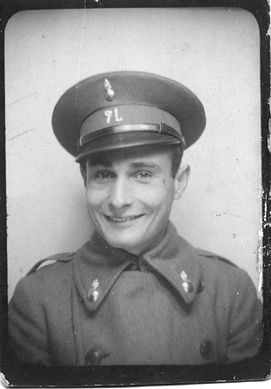
Okay I’m just editing my reblog to add this picture of Juan Pujol Garcia because I feel that it adds so much to the story to picture him doing ALL THE ABOVE with this expression:
What a legend.
Thank you Jess for this extremely important addendum.
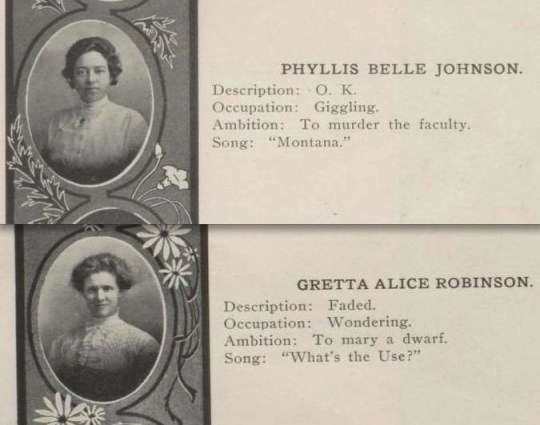
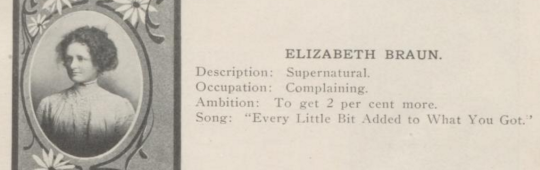
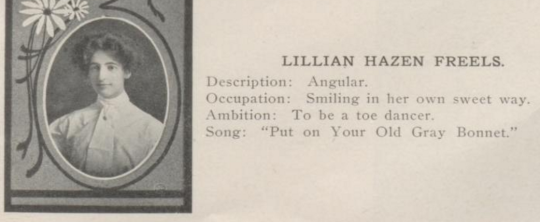
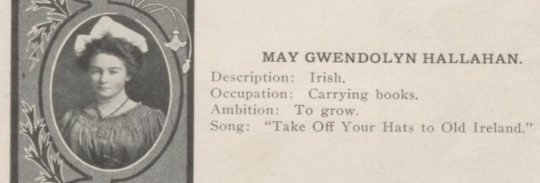
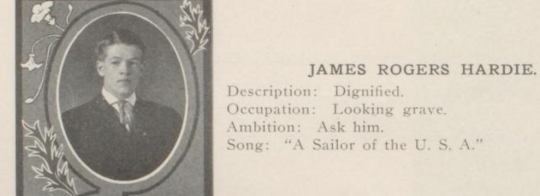
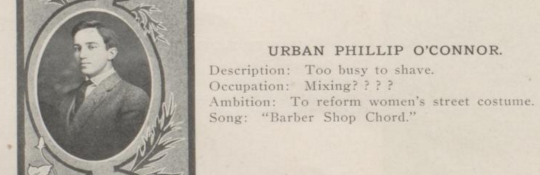
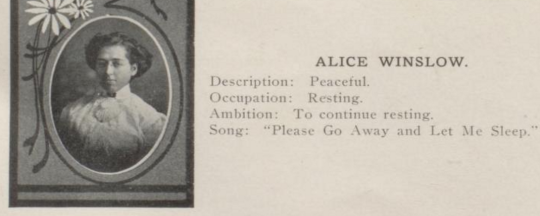
These alarming and quirky yearbook quotes are found inside Spokane High’s Class of 19111, which include some pretty bizarre ambitions. Some of them include “ambitions” of murdering the faculty and marrying a dwarf. Take a look at their perplexing words below.




 sparksoffandommagic