Roses are red, that much is true, but violets are purple, not fucking blue.
I have been waiting for this post all my life.
They are indeed purple, But one thing you’ve missed: The concept of “purple” Didn’t always exist.
Some cultures lack names For a color, you see. Hence good old Homer And his “wine-dark sea.”
A usage so quaint, A phrasing so old, For verses of romance Is sheer fucking gold.
So roses are red. Violets once were called blue. I’m hugely pedantic But what else is new?
My friend you’re not wrong
About Homer’s wine-ey sea!
Colours are a matter
Of cultural contingency;
Words are in flux
And meanings they drift
But the word purple
You’ve given short shrift.
The concept of purple,
My friends, is old
And refers to a pigment
once precious as gold.
By crushing up molluscs
From the wine-dark sea
You make a dye:
Imperial decree
Meant that in Rome,
to wear purpura
was a privilege reserved
For only the emperor!
The word ‘purple’,
for clothes so fancy,
Entered English
By the ninth century
.
Why then are voilets
Not purple in song?
The dye from this mollusc,
known for so long
Is almost magenta;
More red than blue.
The concept of purple
is old, and yet new.
The dye is red,
So this might be true:
Roses are purple
And violets are blue
.
While this song makes me merry, Tyrian purple dyes many a hue From magenta to berry And a true purple too.
But fun as it is to watch this poetic race The answer is staring you right in the face: Roses are red and violets are blue Because nothing fucking rhymes with purple.
I once took a class in college on the American Mafia, called “The Psychology of the Modern American Crime Syndicate”, but it was like “how to be in the mob 101” taught by a man whose father worked for notorious gangster Lucky Luciano after he was exiled to Sicily. Luciano had this really nice house, and his dad was like his right-hand man in regard to everything, (he called him a Signore-attendant, basically he was like his bff) and so my teacher spent a lot of time around the father of organized crime when he was a kid (6-12 years old). He said that Luciano became like an uncle to him, cause Luciano himself didn’t have any kids, but he was fond of kids in general and he really liked this little guy (my teacher). Apparently, there was this one story about how when Luciano and Meyer Lansky were first working for Arnold Rothstein in like 1918 or something, he sent them out ahead of him to Chicago to meet with some guy there, and it’s a good thing he did, cause there was this ambush set up to kill Rothstein in a restaurant. Luciano and Lansky hightail it back to the lower east side of Manhattan, and report back to him what they saw, but one detail was CRUCIAL to the story: the color of the tablecloth. Luciano said it was white, Lansky said it was beige. They spent like an hour arguing over the color of the tablecloth, they argued so long, in fact, that Rothstein went home and came back a few hours later to find Lansky with a black eye and Luciano icing his hand, fuming in the corner. My teacher wanted to know if it was true, so he asked him when he was 11 years old, while Luciano was reading in his parlor (like outside his bedroom) late one night. Luciano looked at him, took a sip of wine, walked down the hallway and simply said “don’t tell Meyer Lansky this, but it was beige”. That’s my all time fave story about ANYONE, cause he DENIED the fact that it was beige for decades, and that’s something I would do.
we’re all approaching death with each passing day so follow your dreams, confess to your crush, dye your hair, learn latin to summon an elder god and become its best and only friend, sing no matter who can hear, take a road trip with your elder god, be kind when you can, descend into the otherworld
Amazing illustrations of what might be below the surface. At the Schusev State Museum of Architecture
*stares in awe* story ideas.
These really are beautiful… And yet my first reaction was to look for Wayne Manor and the Batcave *headdesk*
my first thought when seeing this was the silent movie metropolis, because these are basically straight out of that movie. anyway that movie scarred me for life and now i can never watch a silent movie ever again
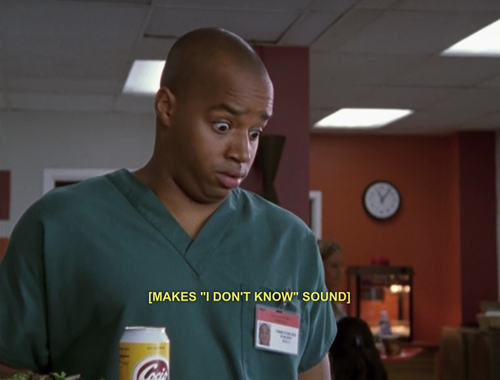
You know what I think is really cool about language (English in this case)? It’s the way you can express “I don’t know” without opening your mouth. All you have to do is hum a low note, a high note, then another lower note. The same goes for yes and no. Does anyone know what this is called?
These are called vocables, a form of non-lexical utterance – that is, wordlike sounds that aren’t strictly words, have flexible meaning depending on context, and reflect the speakers emotional reaction to the context rather than stating something specific. They also include uh-oh! (that’s not good!), uh-huh and mm-hmm (yes), uhn-uhn (no), huh? (what?), huh… (oh, I see…), hmmn… (I wonder… / maybe…), awww! (that’s cute!), aww… (darn it…), um? (excuse me; that doesn’t seem right?), ugh and guh (expressions of alarm, disgust, or sympathy toward somebody else’s displeasure or distress), etc.
Every natural human language has at least a few vocables in it, and filler words like “um” and “erm” are also part of this overall class of utterances. Technically “vocable” itself refers to a wider category of utterances, but these types of sounds are the ones most frequently being referred to, when the word is used.
Reblog if u just hummed all of these out loud as you read them
This still doesn’t tell me how to convey this sound in writing. I notice, in fact, that even with all those other sounds written out (hmmm, awww, etc), the I don’t know sound is not written out there!
There must be a slightly more eloquent solution than “he shrugged and made an ‘I don’t know’ sound.”
@porcupine-girl well in a text, i write it iono, but when describing it, that is definitely tougher. i sorta make the sound more like mm-NM-Mm, but that looks like it sounds different than how i hear it. this is a very confusing question.






 sparksoffandommagic