another weird thing about beer is that it has weird masculinity connections to it. “ya i’ll get a beer, i don’t want none of them girly drinks” Jimothy, you’re drinking wheat juice with a 5% alcohol content and my mixed, fruity, “girly” drink is 40% alcohol and tastes great
O.KAY *CRACKS KNUCKLES* I AM ABOUT TO GIVE YOU AN EDUCATION
BEER IS TRADITIONALLY A WOMAN’S DRINK, IT IS THE MOST FEMALE OF ALL OF THE DRINKS. FOR THOUSANDS AND THOUSANDS OF YEARS, BEER WAS MADE AT HOME BY WOMEN, TO BE CONSUMED BY WOMEN AND CHILDREN–IT WAS ACTUALLY A SOURCE OF NUTRIENTS FOR MANY HOUSEHOLDS. WOMEN CREATED THE CRAFT OF BEER, AND FOR MOST OF HUMAN HISTORY THAT IS WHO YOU’D BUY IT FROM: MANY WOMEN MADE ADDITIONAL INCOME BY BREWING AND SELLING BEER FROM HOME. IT WASN’T UNTIL THE ERA OF INDUSTRIALIZATION THAT BEER BEGAN TO BE BREWED IN FACTORIES. AND ONCE BEER WAS BEING BREWED ON A LARGE SCALE, IT MADE TO START MARKETING IT TO ALL THE MALE FACTORY WORKERS WHO SUDDENLY HAD EXTRA INCOME. HENCE AN AGGRESSIVE MARKETING CAMPAIGN TO RE-BRAND BEER, A DRINK INTRINSICALLY TIED WITH WOMEN’S HISTORY, AS A ‘MASCULINE’ BEVERAGE.
EVEN BETTER, FEMALE BREWSTERS WERE THE ORIGINAL WICKED OLD WITCH. THE TROPES WE COMMONLY ASSOCIATE WITH STEREOTYPICAL WITCHES ARE ACTUALLY BASED ON THE TRADITIONAL BREWSTER. CAULDRONS & HOT STEAMING POTIONS = BEER BREWING. THE WITCH’S HAT: BELIEVE IT OR NOT POINTY HATS WERE ACTUALLY WORN BY BREWSTERS WHEN SELLING THEIR PRODUCT AT MARKETS: THE ENORMOUS HEADGEAR HELPED THEM STAND OUT, AND CLEARLY TOLD EVERYONE ‘YO MOTHERFUCKA GET YOUR BEER HERE’.
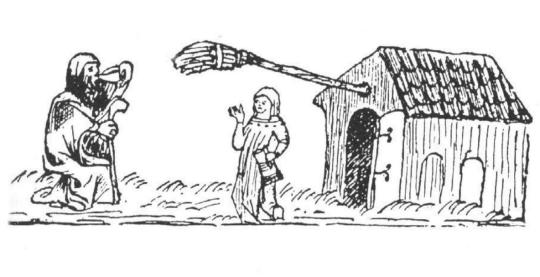
CATS AS FAMILIARS: CATS WERE COMMONLY USED TO PREVENT RODENTS FROM GETTING INTO THE WHEAT. EVEN THE BROOMSTICK IS RELATED TO BEER: A BUNDLE OF TWIGS RESEMBLING A BROOM WAS USED AS AD FOR ALEHOUSES
so basically, beer is the ultimate woman’s and witch’s drink
REBLOG ME
fuck u guys, i didn’t spend 20 min fact checking for 3 notes
I am impressed at this much knowledge
Also, anthropologists say there is much evidence that women invented agriculture, and that the first semi-permenant agricultural villages were established for the primary purpose of facilitating beer-brewing.
That’s right: Civilization was invented by women. For beer.
I keep trying to like red wine like a grown-up but like … it’s rotten grapes, guys. You can drink things that don’t taste like rotten grapes. Why
Okay I don’t know when this post is from (I came across it stalking multiple blogs). But in case this might help, here is a brief science/wine lesson.
To start off, some facts:
-White wine is made from sweet pulp inside of the grape (minus the seeds).
-Red wine is made from both the skin and the grape (and the seeds and stems…sometimes? Can’t remember).
-Tannin is the substance found in red wines, coffee, dark chocolate. Tannins are responsible for the bitter taste in those foods.
-Tannins are found in the skin of the grape, as well as the seeds and the stems. Therefore, most red wines will have tannins, versus most whites will not have tannins.
-Red wines vary in level of tannins, depending on variety of grape, climate, and fermentation process. Pinot noir tends to be very low tannin. Shiraz/Syrah, choice of poison for our beloved brunette surgeon, is very heavy on the tannins.
-Some white wines (most commonly Chardonnay) are aged in oak barrels instead of metal containers. Oak barrels have tannins, which seeps into the wine during the fermentation process. That’s why Chardonnays tend to be “drier” aka it has tannins.
-White wines like Sauvingnon Blancs are usually fermented in steel barrels (aka no tannins. Aka usually very fruity and light and sweet).
Your ability to taste tannins is genetic.
There is a genetic marker determining whether your taste cells are sensitive to tannins.
Basically two people can drink the exact same wine and have wildly different reactions because: 1. Person A can’t taste tannins, so they taste the actual wine flavor. 2. Person B can taste tannins, and that tends to overpower ALL the other flavors in the wine. Basically all they taste is tannins and none of the wine.
I am super tannin sensitive, so if I drink a wine like Cabernet Sauvignon (very tannin heavy, aka “very dry”, it tastes like bitter ethanol alcohol to me, whereas my best friend can’t taste tannins so the same wine is maybe a little bitter but they can actually taste the grape and different flavors. To her, a wine like Sauv Blanc is too sweet, tastes like sugar water. But to me it tastes good.
So unless it’s the taste of the alcohol or all wines you hate, chances are you might hate the taste of red wine, especially the heavier red wines, because taste the tannin overpowers everything else. And all you taste is bitter bitter ethanol bitter more ethanol.
More tannin info: -Tannins bind to fat.
-This is why tannin heavy wines are recommended with fatty foods (Shiraz and steak). Whenever you eat food with high fat content, the fat builds up on your tongue. A sip of red wine will bind with the fat on your tongue and clear it away. That’s why the sip of wine between bites of fat heavy foods is considered a palate cleanser.
-By that logic, this is why white wines are recommended with low fat foods, like fish. Salmon is fattier than most fish, which is why Chardonnay (tannin heavy white wine) or Pinot Noir (low tannin red wine) is recommended with salmon.
-People who are sensitive to tannins can drink tannin heavy red wines with fatty food and generally the wine won’t taste gross. The fat on your tongue (from that steak) will bind with the tannin and neutralize the tannin taste. Aka the only time I ever drink Cabernet Sauvignon or Shiraz is with a steak or heavy, creamy pasta. Aka never bc I don’t often eat either.
-The reason dairy helps coffee taste better is because the fat in milk/creams binds with the tannins in coffee and neutralizes the bitter taste. This is why people who can’t taste tannins can generally drink coffee black without milk (sugar is a different story). It’s also why almond milk in coffee is the worst idea (almond milk is already bitter and has no fat).
More wine facts: -90% of the “aromas” of wine are marketing BS
-You know the labels that say like “cherry with a hint of blackberry?” There’s no real way to infuse cherry or blackberry into grape wine without screwing with the fermentation process. It’s all created by the wine marketing industry to sell you win. Sometimes if you smell cherry before you drink the wine, you might taste it in the wine (because majority of flavor comes from smell). Or if you think there is cherry flavor in the wine, your brain can trick your taste buds into tasting it.
-The only true flavors found in real grape wine are grapes (obviously), oak/earthy flavor (the barrels), vanilla (barrels, oak sticks), tannins. (There are a few others but can’t remember. I think maybe cinnamon?).
-People’s perception of wine often affect how good it tastes to them. Social psychology studies show that people will rate the exact same wine differently if they’re told the wines are different in price. (They rated the more expensive wine as tastier).
tl;dr Whether you can taste tannins is genetic. Exact same wines taste different for different people depending on your genetic makeup. If you’re sensitive to tannins, red wines won’t taste like anything other than bitter alcohol. Genetics/tannins are why people generally have preferences for red or whites.
this is extremely informative and i have learned a thing about myself, which is that i CLEARLY inherited the tannin-tasting genes from my teatotaling mother and not from my dad who subsists entirely on espresso and cabernet sauvignon.
A compilation of my Glow pieces from the last few days, a full Rainbow!! In total it has taken me about 3-ish days to design and finish all six figures and I’m very happy with the completed project 🙂
The answer is apparently “because we’re actually able to eat it”
Fun fact: white people (specifically Northern European white people) have a genetic mutation that allows them to digest lactose even after weaning, which is abnormal for all mammals and also most humans. It’s theorized that because Northern Europe doesn’t get a lot of sun, an alternative source of vitamin D (like milk) would be a useful trait. It’s a very recent mutation that would only have happened after humans started domesticating animals like cows and goats.
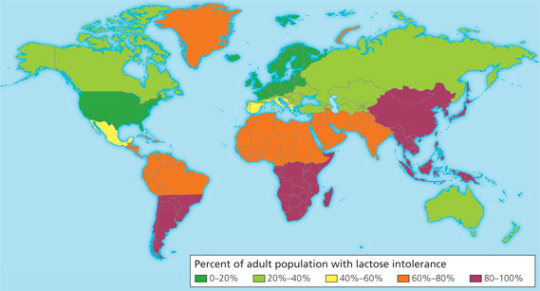
oh no, my bizarre moment has come, cause lactose tolerance is actually A Thing I Know About because it’s played a fascinating role in human evolution for thousands of years. This chart displays some of the broad trends, but it’s giving near continental averages, which doesn’t showcase how this kind of thing really breaks down and some of the surprising exceptions.
Lactose tolerance is the majority trait for only a very few population groups: North Europeans (and therefore populations that draw heavily from that stock, such as America,) nomadic central Eurasians, and sub-Saharan pastoralist Africans, but that latter group is often overlooked. The vast majority of Africans cannot process lactose, but certain people groups whose lifestyles have revolved around cattle for thousands of years will have 80% and even approaching 100% lactose tolerance rates. They’d be spots of dark green amidst a sea of orange and burgundy on the above chart.
Our hunter-gatherer ancestors were almost entirely lactose intolerant, that is definitely the biological norm (and people groups who maintained that lifestyle, such as Native Americans, remained as such – along with groups who transitioned to sedentary agricultural lifestyles, but I’ll get into that). As such, lactose tolerance is an adaptive trait that only became prevalent in environments that exerted strong selective pressure for it. So, cows were domesticated some 10,000 odd years ago in the Middle East (and some have contended for an independent domestication event in Africa as well). In either case, cattle quickly spread across the continent and we know there was milking and cheese production at least 6,000 years ago in both the Nile and Mesopotamia. While cow meat would have been enjoyed by all, in agricultural societies milk and cheese would have been options, but hardly staples as there were plenty of other things to eat as well, and therefore there would have been no selective pressure for processing lactose. Also, sedentary societies had ways of processing milk and cheese that allowed lactose intolerant people to drink/eat dairy products. Fermenting milk or aging cheese breaks down lactose, making it a non issue once ingested. This is why fermented milk may seem utterly foul to many Westerners, but is extremely common in other parts of the world. But, fermentation and aging requires time, and the ability to store things in a single location for weeks or even months. Sedentary societies adapted the milk to fit their biology, but nomadic societies did the reverse.
There are still mobile pastoralist societies in Africa today, and there have been for thousands and thousands of years. For many of them, cows are not one of many dietary options, they are the single dietary staple around which their lifestyle revolves. Biologically, this means you gotta get with the program if you wanna survive. For most mobile tribes, fermentation and aging weren’t options, so there would have been strong selective pressure favoring those who could drink milk straight outta the cow, as they would have had an additional, highly nutritious food source available to them. Milk also allowed for a marked shortening of the weaning process, transitioning children from breastmilk to cow’s milk, which would again be advantageous for groups where both the men and women work and are always on the move. Over generations these populations specialized into essentially cow-based lifestyles, creating a survival niche highly advantageous to them, and fast forward thousands of years and there are groups in Africa with near ubiquitous lactose tolerance, while the rest of the continent (and the world really) is nearly entirely intolerant.
Many of these same factors would have influenced the central Eurasian populations, which is why Mongolians and other descendants of nomadic steppe peoples are largely lactose tolerant, as mare’s milk would have been a dietary staple (though they also developed efficient ways to ferment it).
North Europeans developed lactose tolerance in response to deficiencies in certain nutrients. The northern climate limited Vitamin D production, and the agricultural products available to them were often low on calcium and protein, and so dairy farming developed alongside agriculture to create a more rounded diet (and this was limited to Northern Europeans, as Mediterranean peoples such as the Romans wrote about their great confusion at the northern barbarians’ ability to drink fresh milk)
And I promise all of this is fascinating because the ability to process lactose evolved independently in several different population groups and in response to different factors: lifestyles revolving around cows, lifestyles revolving around horses, deficiencies in climate and agriculture. Besides providing insight into human history and biology, lactose tolerance is also a great example of convergent evolution, where different genetic populations in different environments produce similar results.
And uh, that’s my rant about the role of milk and lactose tolerance in human evolution.
My fav part is “I promise all of this is fascinating”.
a few years back i had a habit of noting down any random words or phrases that came to me when i was dreaming or half-asleep and when i was clearing out my files today i found the document where i wrote them all up
it’s. um.
….an experience
somebody wanted to see more of these, so here’s them. i aim to serve.
There’s probably a German compound word for that feeling you get at 2am when you’re single in your mid twenties and the creeping doubt that you’ve somehow missed your only chance at love because you didn’t meet someone in college and now it’s too late
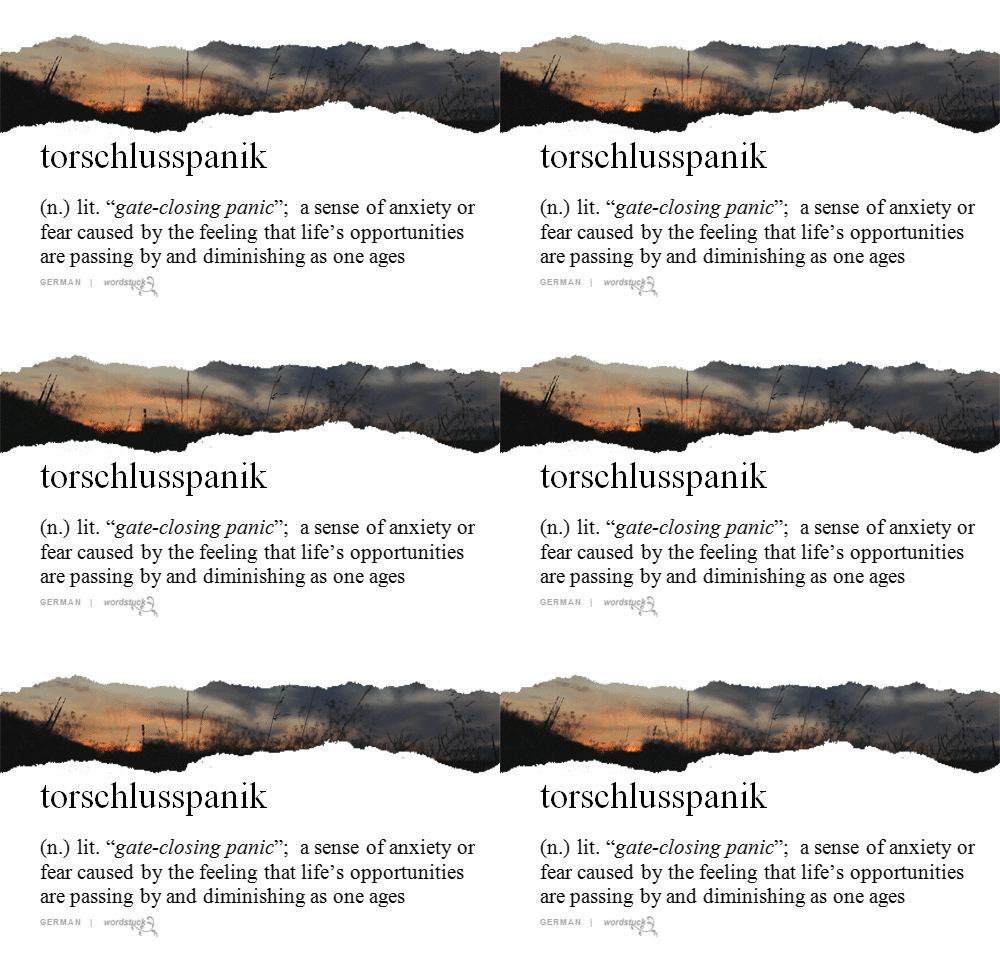
The german word you are looking for is ‘Torschusspanik’




 sparksoffandommagic